Sciatic Nerve Floss
This is a pulse, not a hold. Slide the nerve gently. Two seconds in, two seconds out, ten repetitions. Glide for 30 seconds each side, never holding the end position. You should feel a gentle pulling or sliding sensation in the back of the leg or behind the knee. The point is mobility, not stretch. There should be no sharp pain at any point in the range.
Sciatic flossing differs from a static stretch because both ends of the nerve are loaded and unloaded in opposition. The knee extension stretches the distal nerve while chin-tuck stretches the proximal end; reversing each end at the same time means the nerve slides in its sheath without sustained traction. This is critical: a chronically irritated nerve responds badly to sustained traction (which is what a held stretch produces).
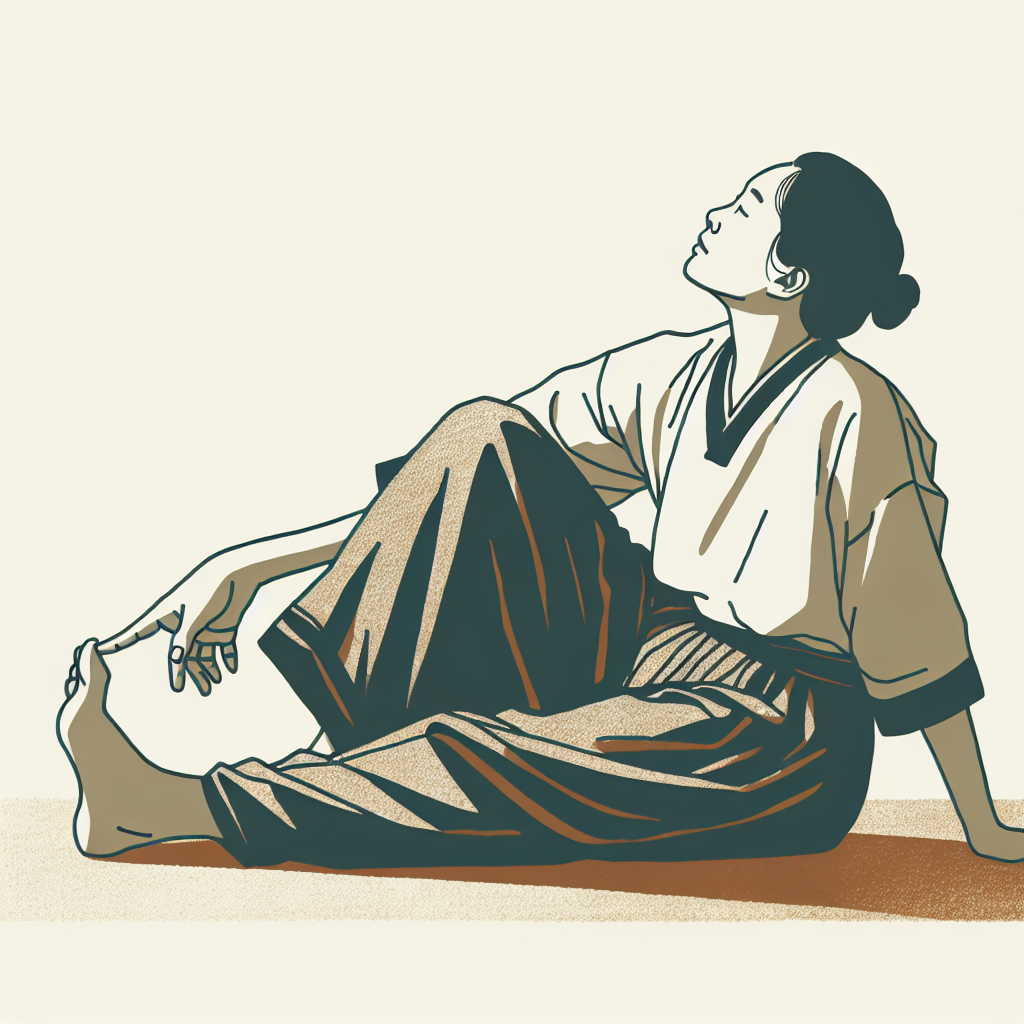
Illustration. Follow the steps for the actual technique.
How to do it
- 1
Sit upright on a chair, both feet flat, back unsupported
Seated upright
- 2
Slump forward slightly and tuck your chin to your chest
Slump and tuck
- 3
Slowly straighten your right knee while simultaneously lifting your chin and looking up
Knee straight, chin up
- 4
Slowly bend the knee back down while tucking the chin again. This is one rep
Reverse: chin down, knee bent
- 5
Do not hold either end position. Ten gentle reps, two seconds each direction. Switch sides
Glide, do not hold
The evidence
Sciatic flossing differs from a static stretch because both ends of the nerve are loaded and unloaded in opposition. The knee extension stretches the distal nerve while chin-tuck stretches the proximal end; reversing each end at the same time means the nerve slides in its sheath without sustained traction. This is critical: a chronically irritated nerve responds badly to sustained traction (which is what a held stretch produces).
Citation: Coppieters MW, Butler DS (2008). Do "sliders" slide and "tensioners" tension? An analysis of neurodynamic techniques and considerations regarding their application. Manual Therapy
Common questions
How long should I hold the Sciatic Nerve Floss?
The Sciatic Nerve Floss is a pulse, not a hold. Glide gently for 30 seconds on each side, about two seconds in each direction, and never hold the end position. Sustained traction on an already-irritated nerve tends to make it worse; the benefit is in the sliding motion itself.
What should I feel during the Sciatic Nerve Floss?
A gentle pulling or sliding sensation in the back of the leg or behind the knee. The point is mobility, not stretch. There should be no sharp pain at any point in the range.
Is the Sciatic Nerve Floss right for disc-bias or piriformis-bias sciatica?
The Sciatic Nerve Floss suits either sciatica pattern. It mobilises the nerve or gently decompresses the spine rather than forcing the joint hard in one direction, so it is appropriate for both disc-bias and piriformis-bias presentations.
When should I stop the Sciatic Nerve Floss?
This is a glide, not a stretch. Do NOT hold the end position. Holding the position adds neural tension which is exactly what an irritated nerve does not need. If you feel shooting pain down the leg during reps, stop immediately.